
Crechale chalks up his first major win at Stars & Stripes Split Bracket event in TN
 admin
admin

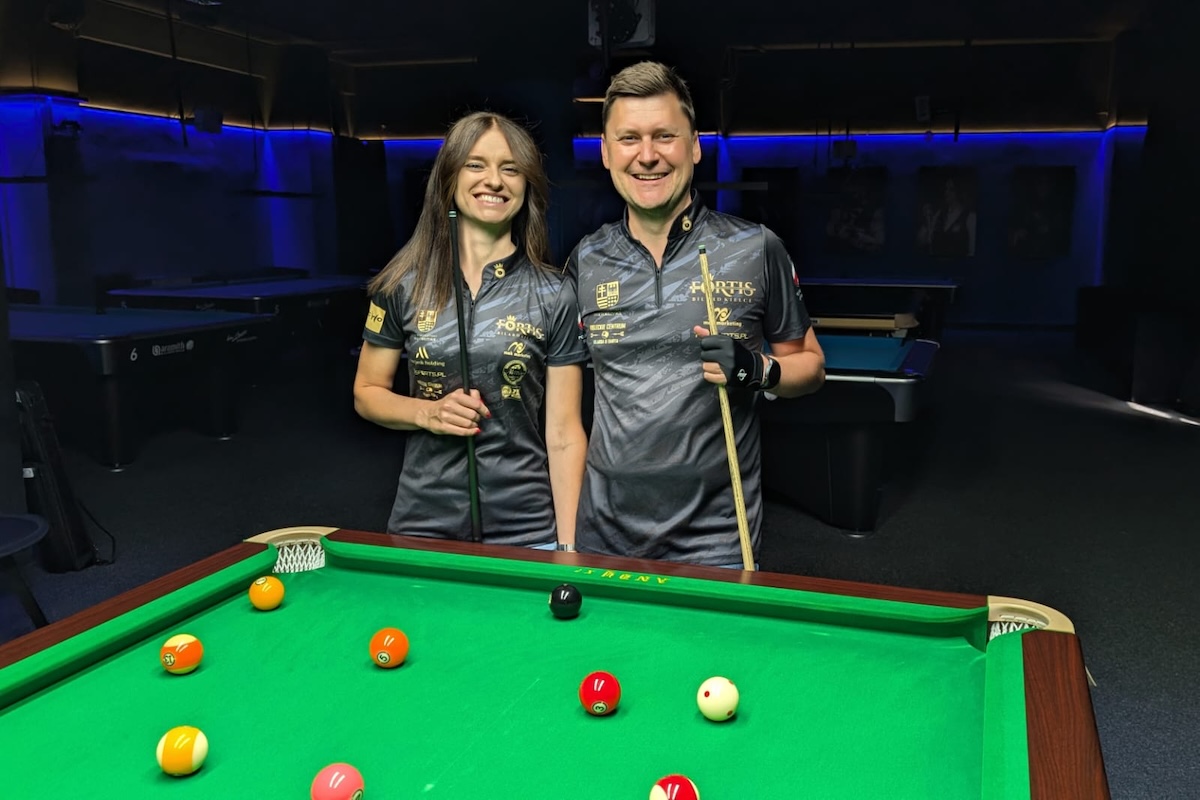
Phillip Crechale and Jamie Barlow
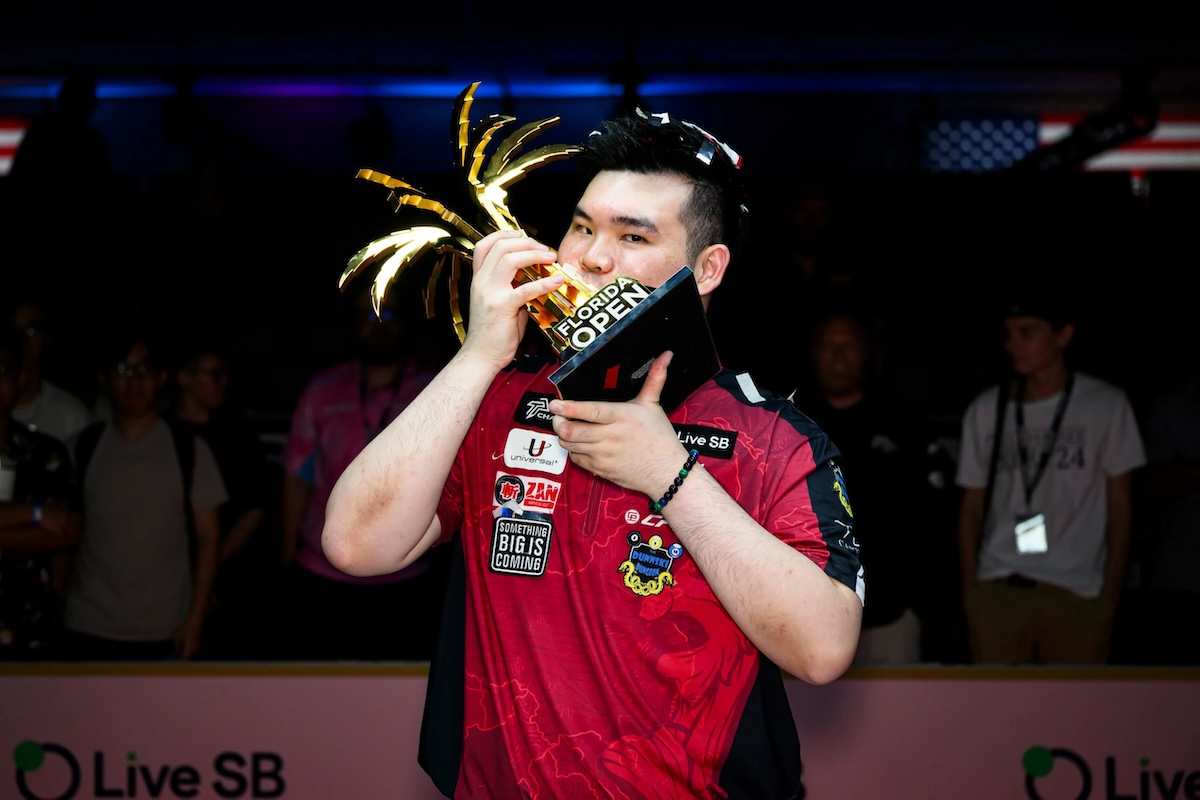
Since its inception, our coverage of national and international pool events has always featured a healthy influx of new names entering our database with a first-ever (recorded) cash payout and/or major/regional tour win. While Kentuckian Phillip Crechale made his entrance into this database in February with a win at Jersey Girl Billiards’ Music City Split Bracket event (17th), he gets a ‘ring-a-ding’ recognition bell (like some bartenders ring when they get a good tip) for coming out on top at this past Memorial Day weekend’s (May 23-25), $1,000-added Stars and Stripes Split Bracket event, hosted by J.O.B. Billiards in Madison, TN. He went undefeated through his Low Side bracket, lost the first set of a true double-elimination final (double hill), came back to win the second set and claimed the event title.
Held under the auspices of Jersey Girl Billiards and its (agreed-upon term) Chief Chaos Consultant, Chrissy Perlowski, the Stars and Stripes event drew 130 unique entrants to a High Side (90) and Low Side (40) pair of brackets. It is notable that at this main event, the High Side field drew more than twice as many entrants as its Low Side field. It’s probably happened before – somewhere, at some time – but it is very rare that Low Side beats High Side for entrants in a split bracket event.
The event also drew 30 entrants to a Friday night Warm-Up, 19 to a Natural Born Women’s event and 39 to a Sunday Second Chance event. The winners and runners-up in two of those events opted out of a final match and split the top two prizes. Michael Laney split the Warm-Up cash with Rodney Morris, while Lee Uhles ‘shared the (top prizes) wealth’ with Amanda Huff in the Sunday Second Chance event.
Karissa Miller and Casey Cork battled three times in their quest for the Natural Born Women’s title. Miller took two out of those three to claim it. Miller did not have a rack chalked up against her until she got to her winners’ side semifinal. At that point, Tennessee Howell managed to win a rack, though Miller would win, advancing to the hot seat match. Just like Miller, Casey Cork was not scored upon until she got to her winners’ side semifinal, against Stephanie Butler, who won two, before Cork joined Miller for the hot seat match. Miller won the first of their three 5-1.
On the loss side, Howell and Butler picked up Kim Smith and Kathy Sanders, respectively. Smith had won two on the loss side to meet Howell. Sanders also won two on the loss side (one of them, double hill versus Brenda Anderson) before running into Butler. Both matches went double hill. Smith over Howell (3-4, Howell racing to 5) and Sanders over Butler (4-2, Butler racing to 3).
Sanders allowed Smith only a single rack in the quarterfinals that followed. Miller, fresh off of her hot seat match defeat at the hands of Cork and awarded a single ‘bead on the wire’ in the semifinal race to 4 against Sanders, defeated her 3-2. Miller came out ‘gunning’ for redemption in the opening set of the true double-elimination final and found it. With two ‘beads on the wire’ in a race to 5, she battled Cork to double hill and won that first set 3-4. To prove her point, she won the second set 3-1 to claim the Natural Born Women’s title.

Casey Cork and Karissa Miller
Three highest FargoRated competitors fail to finish higher than 9th in Split Bracket event
It’s hard to figure how such luminaries as Johnny Archer, Rodney Morris and Robb Saez (the three highest Fargo-Rated players in the High Side bracket at 754, 751 and 748, respectively) managed to end up outside the final eight in that bracket. The range of rates on the High Side ran from Archer’s high to a low 508 for Adam Cooley, along with a pair of ‘unrated’s. Archer lost to a 627 and 629, Morris to a 618 and 600, Saez to a 600 and a 640.
We’re aware that FargoRate calculations assigning odds of one competitor coming out on top in a given match (with relevant handicaps figured into the calculations) are not a foolproof way of predicting an individual match outcome. That said, the main event winner, Phillip Crechale (at 558) defeated runner-up Jamie Barlow (640), twice. Both times, Crechale was working with three ‘beads on the wire’ in a race to 6, which, according to FargoRate, gave him a 60% chance of winning the matches. Which he did.
Even with handicaps though, combined with what we know, historically, about Archer, Morris and Saez in particular, it seems odd that the top three FargoRated competitors with an average FargoRate of 751 (Morris’ rate), finished behind eight High Side competitors whose average FargoRate was 644. Wouldn’t odds have tended to favor the idea that at least one of them would have gotten closer to the top? Chalk it up to ‘pool’s a funny kind of game that way.’
It would be Rob Byrge (618) who would defeat Jamie Barlow (641) in the High Side hot seat match, from which they would both move into a Final Four bracket that would eventually crown Crechale. Barlow’s trip to that match (racing to 6 or 7 throughout) featured one straight-up race to 6 in his opening round (won by shutout), two matches in which he gave up a single ‘bead on the wire,’ one in which he awarded a ‘bead on the wire’ to an opponent, and one match from which he benefited from a forfeit that, if played, would have given him two ‘beads on the wire’ in a race to 8. Giving up one (racing to 7) to Mike Williamson in a winners’ side semifinal, he won the match to get into the hot seat match.
Byrge, racing to 6 in all four of the matches that put him into the hot seat match, got a single ‘bead’ twice, got five of them against Rodney Morris (in a 6-8 win) and in his only straight-up race to 6, downed John Clayton 6-1 in the other winners’ side semifinal.
With a single ‘bead on the wire’ in a race to 7, Byrge defeated Barlow 6-3 to claim the High Side hot seat. Barlow moved to the High Side semifinal and shut out John Clayton to join Byrge among the event’s Final Four.
Crechale and Lee join Final Four from Low Side bracket
Eventual winner, Phillip Crechale, who was awarded an opening-round bye, won six straight matches to claim the Low Side bracket’s hot seat. Playing with a single ‘bead on the wire’ in races to four, he won half of them double hill, against Jeremy Neal, Andy Schroth and in the winners’ side semifinal that put him into the hot seat match, Christopher Kemps. Crechale came up against Samuel Morrow in the match, who’d played six matches (no bye) just getting to it, all but one in which he was racing to four. Over his first 20 games in his first four matches, he gave up only three racks. In his last two, getting to the hot seat match, with a single ‘bead on the wire’ in races to 5, he fought and won double-hill matches against Edwin Almin and in a winners’ side semifinal, Austin Weaver.
Morrow got slowed down a bit in the hot seat match that followed, with Crechale defeating him 3-1 and punching his ticket to the Final Four. Morrow moved over to the Low Side semifinal and ran into Janeen Lee, who’d been shut out in the second, winners’ side round and went on a long-distance (11 match) loss-side trip. That trip, racing to 3 throughout, began with two straight, double-hill wins, would end up with three, and in the eight matches that didn’t go double-hill, (getting more ‘beads’ than he’d give up), he chalked up an aggregate score of 31-11, giving up one rack each to five of them and shutting one of them out. The last two ‘one rack each’ were recorded in his quarterfinal victory over Christopher Kemps and his semifinal victory over Samuel Morrow, which put him into the Final Four.
Crechale and Byrge, as hot seat occupants of their respective Low and High Side brackets, were up first in the short, Final Four bracket. Though separated by only 28 FargoRate points (Byrge at 525 and Crechale at 558), Crechale picked up three ‘beads on the wire’ in a race to 6. As it turned out, he didn’t need any of them. He shut Byrge out.
With Lee picking up four ‘beads’ in a race to 7 on the loss side of the Final Four bracket, he and Barlow battled to double hill. Barlow won it and got right to work against Byrge, to whom he awarded one ‘bead’ in a race to 7. Barlow won that (in effect) semifinal 7-4.
If you look at the two scores in the double-elimination finals, the first looks like a solid win and the second appears to be a double-hill last match. The very fact that there were two matches means that appearances can be deceiving. Giving up three ‘beads on the wire’ in a race to 6 in the opening set, Crechale and Barlow battled to double hill, with Barlow prevailing 6-2. In the second set, same ‘beads,’ Crechale didn’t need any of them, winning it 3-2 to claim the Stars & Stripes Split Bracket title.